Canning is, to a large degree, incredibly simple. It's just a matter of finding a recipe, boiling your jars and lids, making your recipe, filling your jars, and giving them a bath.
Seriously, that's all there is to it.
Let's break down those five steps.
Finding a Recipe
You can when you can. Canning, by the time you buy the jars, produce and other ingredients, can be expensive. A good way to help keep it cost effective is to can what's in season. This means I'm not making strawberry jam in October or marinara in May.
There are a lot of really great books out there, but until you're comfortable with canning, I'd stick with Ball's books. Ball is the Vatican of canning. They've been at it for a while. They're good.
My favorite Ball Canning Book is the Complete Book of Home Preserving. This isn't your grandma's canning book. With recipes like brandied peaches and cinnamon pears as well as the classics, I've used this book every season with huge success.
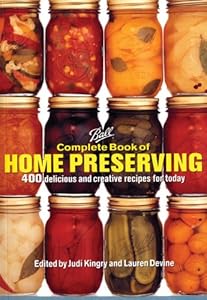 |
| Photo courtesy Amazon |
Canning is science wrapped in a sugary sweet syrup of homespun goodness. There are really two methods of canning - water bath (for which I've given you a list of supplies) and pressure canning (for which I haven't). The difference between the two is acid.
When a recipe calls for a pressure cooker, this means you cannot safely can it with a water bath. Low acid foods like green beans, chicken stock, corn, soups, fish, and potatoes can't get to a proper temperature in a water bath to kill bacteria and there isn't enough sugar or vinegar (or lemon juice) to do the job.
Water baths are used for jams, jellies, relishes, pickles, and some sauces.
Pressure cookers are advanced canning, folks. Don't be seduced by pictures of pretty corn kernels or brilliant green beans until you're ready to buy a pressure cooker. Just avoid those pages until you're ready to take that step.
And for the record, you cannot can pumpkin butter. I don't care what your grandma told you. I don't care what recipe you found on Pinterest. Ball's helpline is pretty specific that pumpkin butter is not safe in even a pressure cooker. The density prevents the interior of the butter from reaching a temperature that will kill bacteria.
Taking Care of Your Jars
Before beginning, inspect your jars to make sure there are not cracks or chips. The last thing you want is your gorgeous cherry jam cracking and filling your water bath. When you're happy with them, put those suckers in hot water - either your dishwasher or your water bath while it's happily boiling away.
The reasons here are two fold - sanitizing and preventing cracking when you put a hot filling in a cool jar. I have a friend who keeps her oven on low and stores her jars in there until they're ready to fill.
Lids
Your lids have two parts - the ring and the lid. The rings can be reused, the lids cannot. When you take them apart, you'll notice that your lid has a reddish colored ring around the outer rim. This is the wax that helps provide the vacuum seal.
Because your lids will touch your food to a certain degree, pop those puppies in boiling water.
Water Bath
Fill your water bath about 2/3 full. You're going to want the water to reach about an inch over the tops of the jars. You're going to have to adjust the amount of water in it throughout your canning day because of, you know, displacement.
Filling Your Jars
You've made your recipe - whether it was a sweetly delicious blueberry jam or a tart and tangy sweet pickle relish. It's time to fill your jars.
Using your funnel, ladle it into the jars. Every recipe will tell you how much head space you need. Typically, for jams and jellies, it's a quarter of an inch. This means from the top of your jar - the very tip top rim - to the jam, you should only have a quarter of an inch. Wipe the rim of the jar with a damp paper towel to make sure it's clean.
Place a lid on the jar and secure with a ring until finger tight.
It will all be very hot.
Seriously.
When your jars are filled it's time to put them in the water bath.
Processing
Each recipe will let you know how long you need to process your jars. Gently lower your jars into the hot water with your jar lifter and cover it up, setting your timer. When the timer goes off, take your jars out (though some recipes keep the jars in the water a bit longer with the heat turned off) and set them on a towel nearby. What you're waiting to hear is that magical pop of a vacuum sealed jar.
And that's it! You've canned!
Side Note
There's a ridiculous method being circulated on Pinterest right now that says you can just tip your jars upside down and they'll seal.
I tried it with a jar of jam once, curious as to how good the seal was. When it was cooled and the lid had "popped", I let it sit for a few minutes and then tried to pry the lid off the jar with my fingers. It held for a second and lifted right off.
In contract, my water bathed jars require a bottle opener to come off.
Which seal would you rather have?
Conclusion
There you have it. The down and dirty of canning - based on my experiences. I encourage you to go out and can! It's truly not that difficult and there really is nothing better than opening a jar of strawberry jam on a cold, rainy morning in December. It's like opening a taste of summer.


No comments:
Post a Comment